
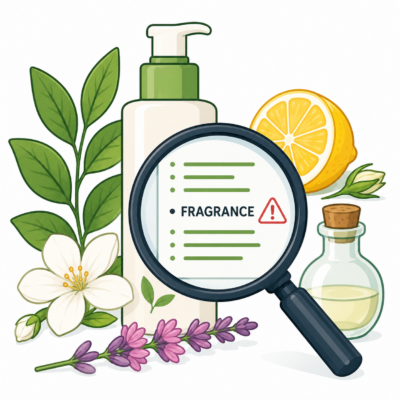
Fragrance can make a skin care product feel fresh, luxurious, calming, or uplifting. From floral notes to citrus-inspired blends, scent often plays a major role in how consumers experience a cream, cleanser, lotion, or body care product. However, fragrance is also one of the most common categories of cosmetic allergens, which means some people may experience sensitivity or allergic reactions after using scented products. The U.S. FDA lists fragrances among common allergens found in cosmetic products, along with preservatives, dyes, metals, and natural rubber.
For Bodywell Natural Skin Care Inc., helping customers make informed choices is an important part of natural skin care. Understanding fragrance allergens can help consumers choose products that better match their skin’s needs, preferences, and sensitivities.
What Are Fragrance Allergens?
Fragrance allergens are specific scent-related ingredients that may trigger an allergic response in some individuals. These ingredients can come from synthetic fragrance compounds, essential oils, botanical extracts, or naturally occurring aromatic components in plants.
A fragrance allergy is different from simply disliking a scent. It may involve skin symptoms such as redness, itching, dryness, stinging, bumps, or irritation after exposure. In some cases, reactions may appear shortly after use; in others, they may develop after repeated exposure.
Fragrance ingredients may appear on labels as “fragrance,” “parfum,” “aroma,” essential oils, or individual allergen names such as limonene, linalool, citral, geraniol, eugenol, or citronellol.
A Brief History of Fragrance Allergen Labeling
For many years, fragrance formulas were often listed simply as “fragrance” or “parfum” because scent blends can be proprietary. This made it harder for consumers with known sensitivities to identify which specific ingredient might be causing a reaction.
Regulations have gradually evolved. In the European Union, fragrance allergen labeling requirements have expanded. Regulation (EU) 2023/1545 updated cosmetic labeling rules for fragrance allergens and expanded the number of fragrance allergens that must be disclosed on cosmetic labels under certain conditions.
In the United States, the FDA states that it does not have the same legal authority to require allergen labeling for cosmetics as it does for food. The FDA advises consumers concerned about fragrance sensitivity to choose fragrance-free products, check ingredient lists carefully, and contact manufacturers with questions.
Benefits of Fragrance in Skin Care
Fragrance is not automatically “bad.” For many consumers, scent improves the overall product experience. A pleasant aroma can make daily skin care feel more enjoyable and can support a relaxing self-care routine.
Fragrance may also help mask the natural smell of certain raw ingredients. Some natural oils, butters, botanical extracts, and active ingredients have strong earthy or medicinal odors. A carefully selected scent can make a natural skin care product more appealing without changing its core function.
In wellness-focused skin care, fragrance can also contribute to the emotional side of self-care. A gentle scent may help turn a simple moisturizer or cleanser into a more calming daily ritual.
Downsides of Fragrance in Skin Care
The main downside is that fragrance can be irritating or allergenic for some people. This is especially relevant for those with sensitive skin, eczema-prone skin, rosacea-prone skin, or a history of contact dermatitis.
Another concern is that “natural” does not always mean non-irritating. Essential oils and plant-derived aromatic compounds can still contain fragrance allergens. For example, citrus, lavender, rose, peppermint, and tea tree oils may be well tolerated by many people, but they can cause reactions in others.
Fragrance can also make it more difficult to identify the cause of irritation. If a formula includes many aromatic ingredients, consumers may not know which one their skin dislikes unless they work with a dermatologist or allergist.
Fragrance-Free vs. Unscented
These two terms are often confused, but they are not always the same.
Fragrance-free usually means no fragrance ingredients have been added for scent. This is often the better option for people trying to avoid fragrance allergens.
Unscented usually means the product has no noticeable smell. However, it may still contain masking fragrance ingredients used to cover the natural odor of the formula.
For sensitive skin care shoppers, “fragrance-free” is generally the clearer term to look for.
Natural Fragrance vs. Synthetic Fragrance
Consumers often assume natural fragrance is safer than synthetic fragrance, but the comparison is more balanced than that.
Natural fragrance may come from essential oils, flower extracts, fruit oils, resins, or other botanical sources. It can appeal to consumers who prefer plant-based ingredients and traditional aromatics.
Synthetic fragrance may be created in a lab and can offer consistency, stability, and precise scent control. Some synthetic fragrance ingredients may be less allergenic than certain natural essential oils, depending on the formula and concentration.
The key issue is not whether a fragrance is natural or synthetic. The more important questions are: Is it well formulated? Is it used at an appropriate level? Is the label transparent? Does it suit your skin?
How Consumers Can Make Better Choices
Consumers who are concerned about fragrance allergens can take a few practical steps:
Read ingredient labels carefully. Look for “fragrance,” “parfum,” essential oils, and known allergen names.
Choose fragrance-free products when your skin feels reactive, irritated, or compromised.
Patch test new products before applying them broadly. Apply a small amount to a discreet area and monitor how your skin responds.
Avoid layering many scented products at once. A fragranced cleanser, toner, serum, lotion, and perfume may increase total exposure.
Contact the brand when in doubt. Responsible skin care companies should be able to answer questions about fragrance use and product suitability.
Speak with a dermatologist if reactions continue. Professional patch testing can help identify specific allergens.
What This Means for Bodywell Natural Skin Care Inc. Customers
At Bodywell Natural Skin Care Inc., skin care should feel supportive, thoughtful, and informed. Fragrance can be part of an enjoyable product experience, but it should never be treated as one-size-fits-all.
For consumers who love scented products, choosing well-formulated skin care from a brand that values quality and transparency can make a difference. For those with sensitive skin, fragrance-free or low-fragrance options may be a better fit.
The best skin care routine is one that respects your skin’s needs. Whether you prefer naturally scented products or fragrance-free formulas, understanding fragrance allergens helps you make confident choices.
Bodywell Natural Skin Care Inc. encourages consumers to look beyond the front label, learn about ingredients, and choose products that align with their comfort, lifestyle, and skin care goals.
Conclusion
Fragrance allergens are an important topic in modern skin care because fragrance can be both enjoyable and potentially irritating. While many people use fragranced skin care without concern, others may need to be more selective.
By understanding labels, knowing the difference between fragrance-free and unscented, and recognizing that natural fragrance can still contain allergens, consumers can make more informed choices. Bodywell Natural Skin Care Inc. supports a balanced approach to natural skin care: thoughtful ingredients, clear education, and products chosen with your skin in mind.